
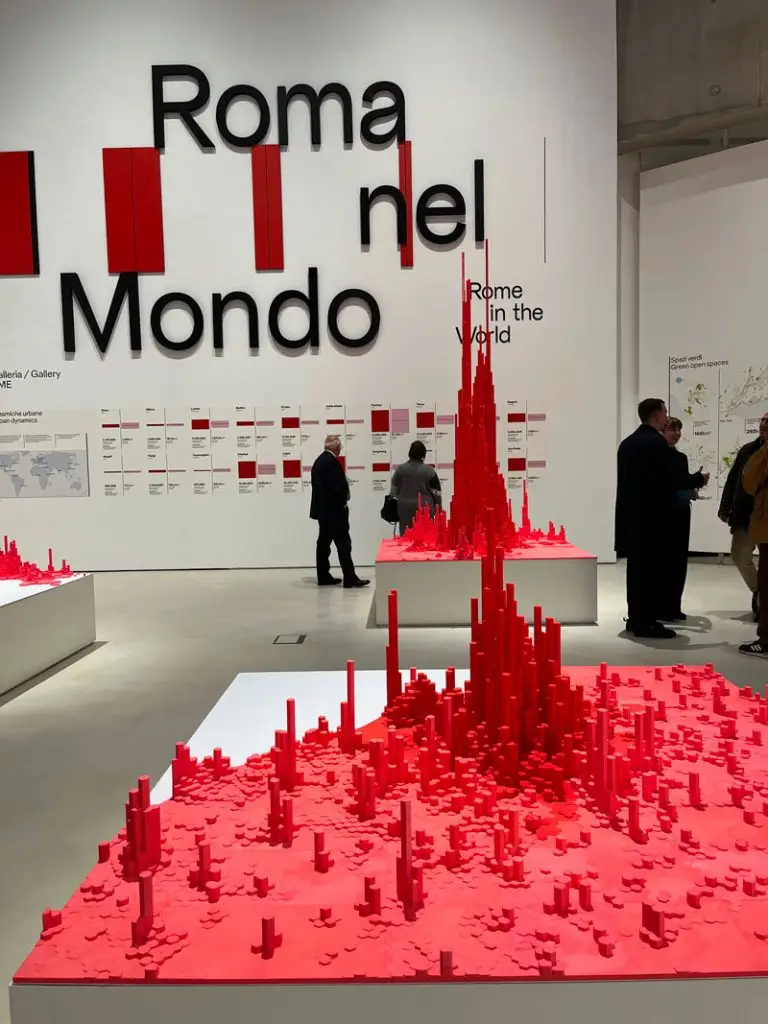
Rome in the World is the title of the recent exhibition at MAXXI, inaugurated on December 16th. https://www.maxxi.art/events/roma-nel-mondo/ The curator, Ricky Burdett, in 2006, as director of the Venice Architecture Biennale, had focused on the same issue: a comparative global evaluation of cities. Cities, Architecture and Society, in Venice, as today’s Rome in the World, through infographic designs and statistics, represent and confront cities’ infrastructure (from greenery to mobility), socioeconomic aspects (from demography to inequality and liveability), urban densities, and historic aspects. So, nothing new on this ground. As Burdett himself said, when I commented on his persistence on the same subject since the Venice Biennale: “Why should I change?”
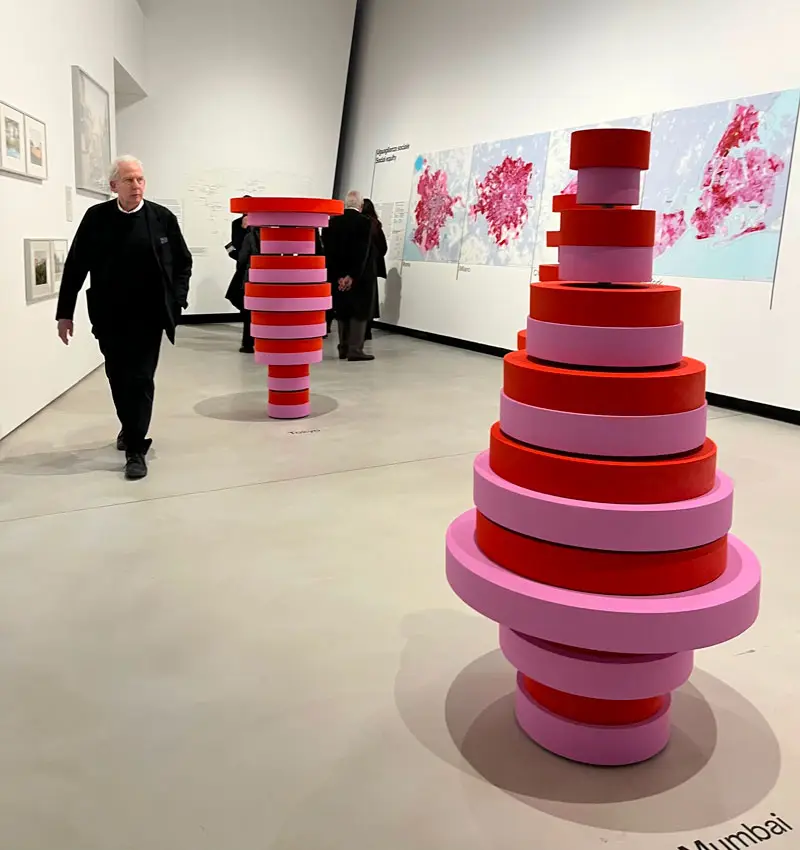
What is new instead is the centrality that Rome assumes in the MAXXI exhibition. A centrality consciously searched, as the president of Acer-Ance Roma, Antonio Ciucci, and sponsor of the exhibition, said: Rome compared not simply with Milan but with global cities. A comparison —done “with the objectivity of numbers” (?) — that aims not necessarily to reach conclusions or drive to future plans, but to put Rome in the spotlight. https://diariodiac.it/la-roma-di-ricky-burdett/
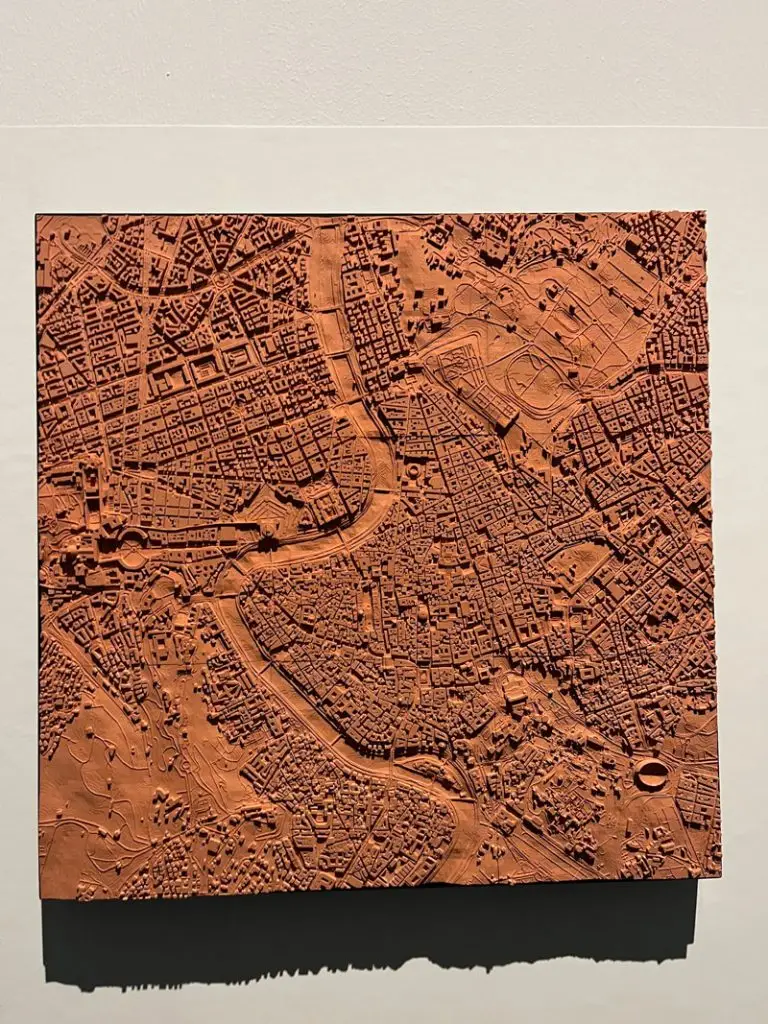
The terracotta model of the Municipality of Rome (scale 1:7,500), hosted in the core of the exhibition, plays exactly this role. Seven meters per eight, based on detailed historical research (a kind of contemporary Nolli plan for its intent to describe space in a three-dimensional way @KetiLelo), represents the whole territory of Rome and will remain in the MAXXI Architecture and Contemporary Design Collections, which commissioned it.
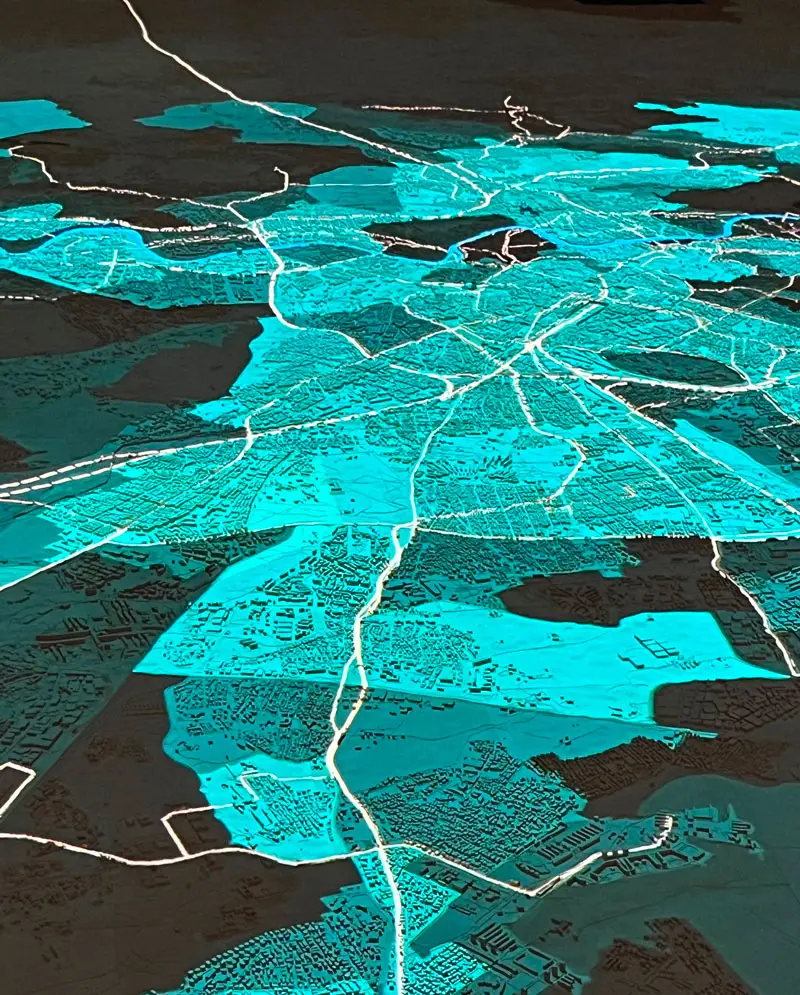
Rome, lacking a city museum that many global cities have, with this model and the light and sound effects projected on the model, allows for various transversal readings of the city,
recovering a centrality in urban debate, never reached in contemporary exhibitions.
In this sense, Burdett’s insistence on global cities https://www.maxxi.art/events/ricky-burdett/ and MAXXI’s first urban exhibition regarding Rome represent a unique event not only for architects and planners, students and tourists, but also for the residents, because this is an exhibition that may become an open collective laboratory, as the organisers’ intentions and the educational programs already suggest.
The opening of the Colosseo and Porta Metronia metro C stations a couple of days ago with their fascinating archeological findings, the Palazzo Braschi exhibition on Villas and Gardens of Rome https://www.museodiroma.it/it/mostra-evento/ville-e-giardini-di-roma-una-corona-di-delizie, and the realisation of several new piazzas in Rome with the Next Generation EU funds, are among the more recent events putting Rome in the spotlight. Stay tuned!
Heleni Porfyriou
All photos are of the author
One Response
Thank you for highlighting the fact that, unlike many other European capital cities, Rome lacks a city museum. Roma nel Mondo offers visitors an integrated interpretive space providing a systemic, spatial and comparative perspective on Rome, synthesising quantitative data from various sources. This helps people to understand the complexity, dynamics and global position of Rome. However, the exhibition is closing in April, so the problem of a capital city without a dedicated museum will remain.